Rusty Becomes Acting Prosecutor
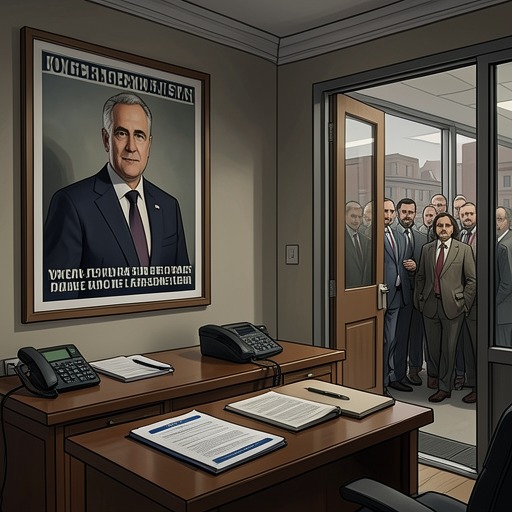
Presumed InnocentRusty Sabich’s appointment as acting Kindle County prosecuting attorney brings him back to the office at the center of his former career, but it does not restore his standing or resolve the murder case that shadowed him. Following Nico Delia Guardia’s recall, a citizens’ commission recommended a new prosecutor, and Raymond Horgan helped make Rusty’s appointment possible. Rusty took office on March 28, four days before the anniversary of Carolyn Polhemus’s murder, accepting the position as a caretaker rather than a candidate for another term.
The recall and the search for a successor
In January, a petition drive led the City Council to authorize a recall election against Nico Delia Guardia. Augustine Bolcarro could have stopped the process, but he maintained a marked neutrality toward Nico. Nico campaigned actively and nearly held on to his office. With about two weeks remaining, he fired Tommy Molto; several civic leaders, including Raymond Horgan, Larren Lyttle, and Edgar Mumphrey, then opposed him. Nico lost the recall by about 2,000 votes. He planned to run for City Council from the South End, and Rusty expected him to win.
After the recall, Bolcarro formed a citizens’ commission to recommend a new prosecuting attorney, and Raymond served on it. The appointment followed a call from Raymond to Rusty. Rusty initially rejected the idea as absurd and impossible. Raymond persisted, presenting the prospect as a chance for rehabilitation; Rusty could not tell whether Raymond meant his own conscience or the county’s more broadly. He eventually agreed to consider the proposal if the necessary arrangements could be made.
Appointment and terms of service
The search for a successor had apparently considered other possibilities. According to rumor, Mac was the commission’s first choice, but she declined to leave the bench. Raymond told Rusty that the relevant people had been consulted and that Rusty would receive universal support. Rusty could see no good reason to refuse. On March 28, four days short of the anniversary of Carolyn Polhemus’s murder, he became acting prosecutor.
Rusty accepted the position on the understanding that he would not run for re-election. The mayor had told him more than once that he thought Rusty would make a fine judge, but had made no formal offer. Rusty said he enjoyed the prosecuting attorney’s job he had taken, while news stories called him the caretaker prosecutor. The appointment thus gave him an active public role without promising either a permanent political future or a judicial one.
Staying in Kindle County
Rusty’s return to office did not repair his relations with the people around him. He described those relationships as strained in peculiar ways, while observing that work was no worse than the ordinary experience of walking from his apartment to buy a dozen eggs. He had accepted that strain when he chose not to leave Kindle County. He did not claim courage or stubbornness as the reason for staying; he believed that the difficulties of starting over elsewhere would be no easier than facing the difficulties already present.
The public image attached to him remained sharply divided from his official position. Rusty expected to remain a kind of museum piece: someone people regarded as having been set up, with Nico having protected Molto, yet who was no longer quite the same. The appointment restored his place inside the prosecutor’s office, not the uncomplicated trust that might once have accompanied it. His return therefore carries a double meaning: rehabilitation was offered as a possibility, but public memory continued to define its limits.
An office shadowed by the unsolved case
Carolyn Polhemus’s murder remained unsolved after Rusty took office. No one spoke of pursuing the case, least of all to Rusty, and he considered a further prosecution practically impossible because two people could not be tried for the same crime. A few months earlier, a jailhouse inmate had attempted to confess; Rusty sent Dan Lipranzer to take the statement, and Lipranzer reported that it was worthless. The case therefore persisted as an unresolved fact of Rusty’s new tenure, even as his appointment placed him back in the public office responsible for prosecution.